Companion Safety Lane independently researches and evaluates the products we feature. If you buy through our links, we may earn a commission. [Learn more]
Every Pet Has a Different Story
Every Need Has a Lane
Helping You See Life Through Your Companion's Eyes

When Something Doesn't Feel Right
It often begins with something small—a quiet feeling that your companion just isn't quite the same as they were before.
Maybe they seem less energetic. Maybe their sleep, appetite, movement, or daily habits have changed. Perhaps they are recovering from an illness, injury, or surgery. Or maybe nothing is easy to explain; you simply know your pet well enough to feel that something has shifted.
Other concerns arrive more suddenly. A gate is left open. A dog slips a leash. A pet wanders farther than expected. You may be trying to find a missing companion quickly, give an adventurous dog safer freedom, or stay connected beyond cellular coverage.
Whatever brings you here, Companion Safety Lane begins with your concern—not with a product.
We created this site to help pet parents make clearer, more thoughtful decisions about smart pet technology. We explore health monitoring, behavior and activity tracking, GPS tracking, escape alerts, lost-pet recovery, virtual boundaries, training support, and off-grid tracking. More importantly, we explain which real-life concerns each type of technology may help address.
We do not believe technology should replace your instincts, your attention, or your veterinarian's care. A tracker cannot diagnose illness. An alert cannot replace good judgment. A virtual boundary is not a substitute for responsible supervision. But the right tool, used with realistic expectations, may help you notice patterns, respond sooner, better understand your pet's daily life, and bring clearer observations to the veterinarian who knows them best.
Companion Safety Lane is an independent, evidence-informed educational guide. We explain what technology can do, where it may help, and where its limits begin—using clear language, without pressure, and without asking you to become an expert before you know where to start.
When you're ready, choose the decision lane that best matches what you're noticing. We'll help you understand what you are noticing, explore the technology that may fit, and move forward with greater clarity for the companion who depends on you.

A Pet-Parent Friendly Decision Roadmap
Start with the concern that feels most relevant to your pet right now.
Each lane is built around a real-life situation—not a product or brand. Choose the lane that most closely reflects what you are noticing, the situation your companion faces, or the peace of mind you are looking for.
Within each lane, we first help you understand the concern. Then we explain the types of monitoring, tracking, or safety technology that may help, where their limits begin, and what questions may be worth considering before you decide.
Start with the concern that brought you here.
Explore the seven paths below. Find the one that most closely reflects what you’re seeing, and discover the lane that may help you better understand and support your companion.
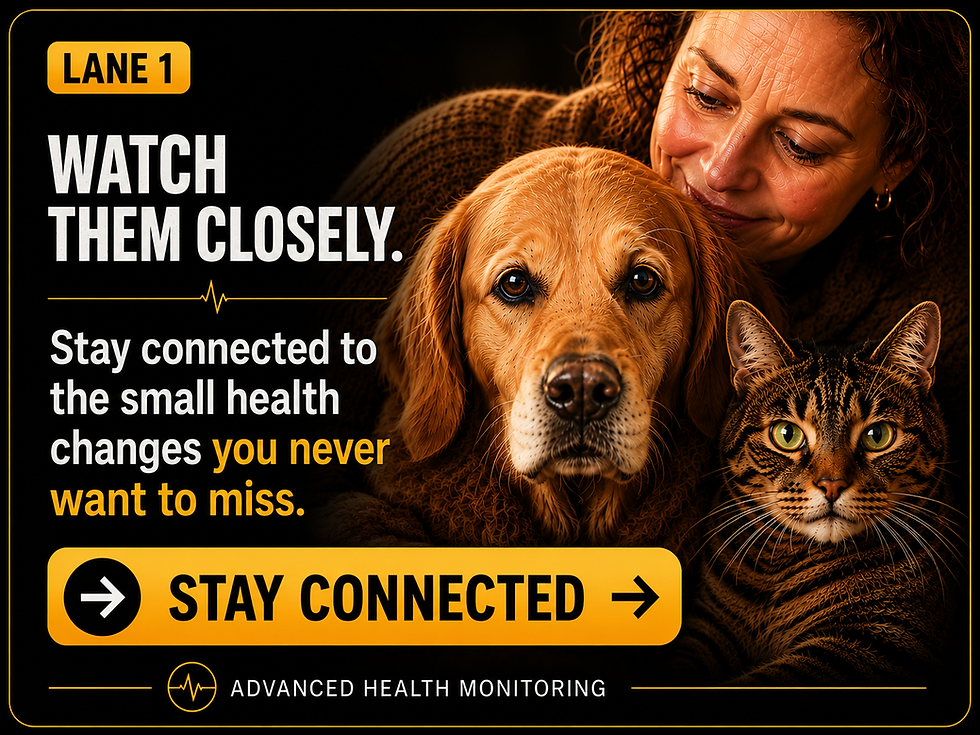
Lane 1 - The Health Changes Your Pet Tries to Hide
Small changes in activity, rest, behavior, or vital signs can be difficult to recognize from day to day. This lane helps you understand how advanced health monitoring can reveal patterns over time and provide clearer information to share with your veterinarian.

Lane 2 - The Daily Habits That Quietly Begin to Change
Changes in eating, drinking, sleeping, behavior, or daily routines often happen gradually and can be easy to overlook. This lane explores how behavioral monitoring helps you recognize meaningful patterns over time, giving you a clearer picture of your companion's everyday well-being.

Lane 3 - Understanding the Routine They Can't Tell You About
Daily movement, rest, play, and activity patterns can reveal how your companion is feeling over time. This lane explains how everyday activity monitoring helps you better understand routines, recognize meaningful changes, and support long-term wellness.

Lane 4 - When Staying Safe Means Staying Close
Some companions are natural explorers, while others may slip away when a gate is left open or an unexpected distraction appears. This lane explores how location monitoring and safety alerts can help you respond more quickly and confidently when every minute matters.

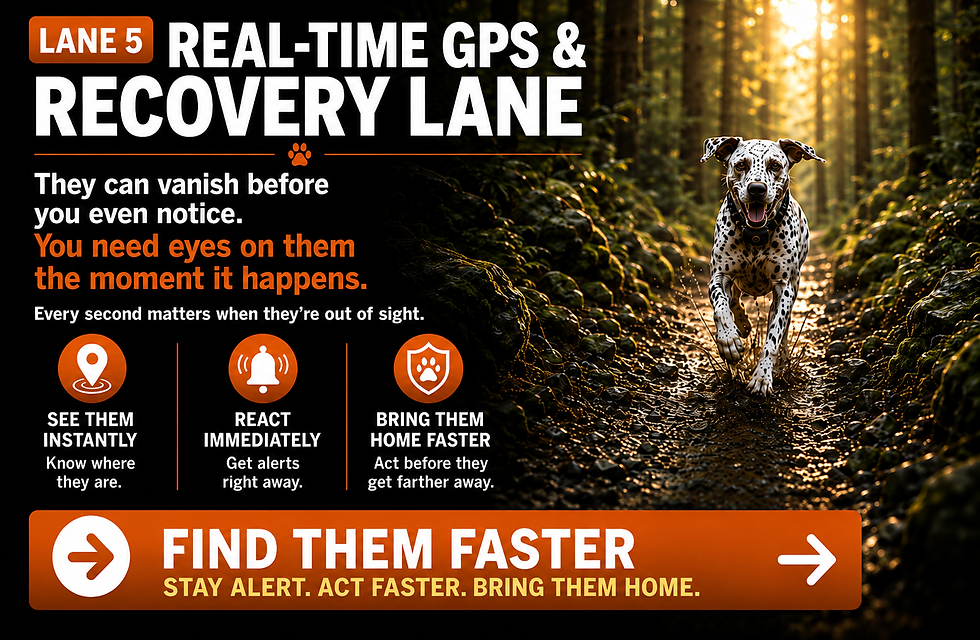
Lane 5 - When Every Second Counts
When a companion disappears, every minute can feel much longer. This lane explores how real-time GPS tracking can help you locate your pet more quickly, follow their movements, and support a faster, more confident recovery.

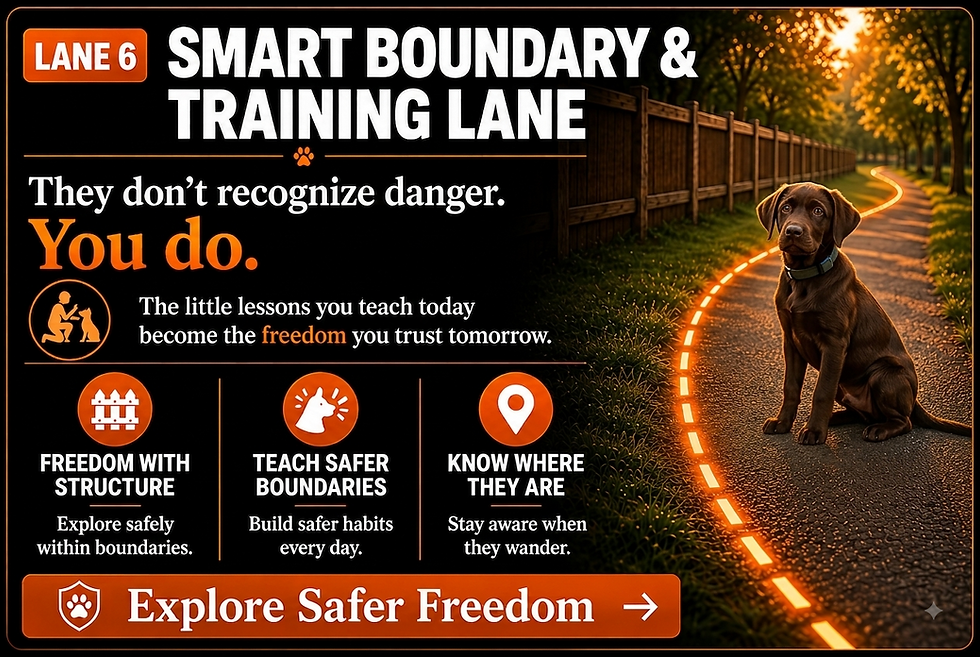
Lane 6 - Freedom With Safe Boundaries
Some companions thrive with room to explore while still needing clear, consistent boundaries. This lane explains how virtual fencing, location awareness, and guided training can help your dog enjoy greater freedom while giving you added peace of mind.
Lane 7 - Beyond Cellular Coverage
Some adventures lead beyond the reach of traditional cellular networks. This lane explores how satellite-enabled tracking can help you stay connected during hikes, camping trips, remote travel, and other off-grid experiences where reliable location tracking matters most.

Off‑grid GPS and satellite tracking for dogs and cats who travel beyond everyday coverage. This lane is designed for pet parents who hike, camp, travel in remote areas, live rurally, or spend time where traditional tracking often fails. It is especially helpful when your companion explores farther than reliable cellular networks reach. Solutions in this lane focus on extended‑range location awareness, satellite‑supported tracking, and advanced connectivity tools that help you stay informed about your companion’s whereabouts and well‑being, even when they venture beyond the places most trackers were designed to serve.
Off-Grid Tracking and Remote Adventure Awareness



Smart boundary and training guidance for dogs who benefit from clear limits and safer habits. This lane is designed for pet parents who want to teach safer behaviors, establish trusted boundaries, and support greater independence without losing awareness of where their dog may wander. It is especially helpful for curious explorers, developing dogs, and families working to build confidence through everyday training. Solutions in this lane focus on virtual boundaries, location awareness, proactive training cues, and habit‑building tools that help create safer routines and more freedom over time.
Smart Boundary and Training Guidance


Lane 5 – Real‑time GPS tracking and recovery when immediate location awareness matters most. This lane is designed for pet parents who need to know where their companion is right now and respond quickly if they wander, become lost, or move beyond sight. It is especially helpful for active pets, outdoor adventures, travel, and situations where every minute can change the outcome. Solutions in this lane focus on live location tracking, instant escape and movement alerts, and recovery tools that help you react faster, reduce uncertainty, and bring your companion home safely.
Real-Time GPS Tracking and Recovery


Security and escape‑prevention monitoring for dogs and cats who love to roam. This lane is designed for pet parents who want greater confidence that they can locate their companion quickly if they wander, become lost, or slip away unexpectedly. It is especially helpful for curious explorers, skilled escape artists, outdoor adventurers, and families who worry about safety beyond the yard. Solutions in this lane focus on real‑time location awareness, safe‑zone monitoring, escape alerts, and recovery tools that help you stay informed, respond faster, and protect your companion when every minute matters.
Security and Escape Prevention Monitoring


Daily activity and everyday‑wellness monitoring for dogs and cats whose routines seem normal but still deserve attention. This lane is designed for pet parents who want a clearer picture of their companion’s daily movement, exercise, sleep, rest, and overall energy. It is especially helpful for establishing healthy baselines, noticing gradual shifts over time, and staying confident that “normal” is still truly normal. Solutions in this lane focus on tracking activity levels, sleep patterns, wellness trends, and GPS awareness so you can stay connected to your companion’s everyday world and recognize meaningful changes sooner.
Daily Activity and Everyday Wellness Monitoring



Behavioral and daily‑routine monitoring for dogs and cats whose habits feel different. This lane is designed for pet parents who are noticing changes in their companion’s sleep, activity, appetite, energy, or everyday rituals and want a clearer picture of what may be shifting over time. It is especially helpful when routines feel “off” but there is no obvious cause. Solutions in this lane focus on tracking daily behaviors, highlighting developing patterns, and helping you recognize meaningful changes sooner so you can discuss them with your veterinarian and make more informed decisions about your companion’s care.
Behavioral and Daily Routine Monitoring


Advanced health monitoring helps pet parents track subtle changes in comfort, recovery, appetite, sleep, and daily behavior. This lane is designed for dogs and cats that may need closer observation due to age, recovery, chronic health concerns, or unexplained changes. Continuous wellness tracking, early alerts, and veterinarian-ready reports help you recognize meaningful trends sooner and support more informed care.
Advanced Health Monitoring


Still Not Sure Which Lane Fits Best?
You do not need to choose perfectly. If more than one lane feels familiar, begin with the concern that feels most urgent, happens most often, or has the greatest effect on your companion’s daily life.
When you’re ready, choose the lane above that most closely reflects what you are noticing.
We’ll help you understand the concern and explore the technology that may support your companion’s needs.
Why Small Changes Matter
Changes in a pet’s sleep, appetite, movement, or mood rarely arrive with a label attached. They slip in quietly—a shorter walk here, a missed meal there, a little more pacing at night, a little less excitement when you pick up the leash.
On any given day, each of these details might mean nothing at all. Pets have slow days, sleepy days, and “not in the mood” days just like we do. But sometimes the changes that matter most begin this way—small, quiet, and easy to explain away until a pattern becomes too clear to ignore.
The hard part for most pet parents is not seeing that something is different. It is knowing what that difference might mean. Is this just a phase, a reaction to weather or routine, or a sign that deserves closer attention?
Often, the changes that are hardest to understand in a single moment become clearer when you can look beyond one day and see a pattern developing over time. That’s where tools that help you notice and track small shifts in sleep, activity, behavior, or routines can make a difference—not by diagnosing problems, but by giving you a clearer picture to discuss with your veterinarian.
Companion Safety Lane exists to support that kind of awareness. Our goal is not to persuade you to buy technology. It is to help you understand when smart pet technologies may offer useful insight into your companion’s health, activity, behavior, recovery, or safety—so you can make more informed decisions, ask better questions, and bring clearer observations to the veterinarian who knows your pet.
What Smart Pet Monitoring
Can and Cannot Do
Smart pet monitoring is not a crystal ball. It cannot tell you exactly why a change is happening. It cannot diagnose illness. It cannot replace a veterinarian’s examination, judgment, or care.
What it can do is help you see what is really happening over time. Small shifts in sleep, activity, eating, or restlessness become easier to spot when they’re tracked instead of remembered. Patterns that feel vague in your memory—“Has this been going on for a while?”—turn into something you can actually review.
That extra clarity will not answer every question, but it can give you better questions to bring to your veterinarian. Instead of “Something seems off,” you can say, “Over the past two weeks, my dog has been waking earlier, pacing more at night, and resting more during the day.” That kind of information can help your veterinary team decide whether a change is minor, needs monitoring, or deserves a closer look.
Used well, smart monitoring does not replace your instincts. It supports them. It helps you notice changes sooner, see them in context, and feel more confident about when to watch, when to adjust, and when to call your vet.
On Companion Safety Lane, technology is not the hero of the story. Your attention is. Smart monitoring is simply a tool that can help you pay steadier, more informed attention to the companion who depends on you.
Built on Veterinary Insight and Research
Companion Safety Lane was created to help pet parents make informed decisions—not rushed ones. The information throughout this site is based on published research, veterinary literature, manufacturer documentation, and independent product research.
Technology will continue to evolve. One principle remains: monitoring tools work best when they support thoughtful observation, clearer conversations, and appropriate veterinary care.
Our goal is simple: to help pet parents understand their options, recognize meaningful changes, and choose technology that fits their companion’s needs—not the other way around.
© 2026 Companion Safety Lane. All Rights Reserved.
Companion Safety Lane provides educational information to help pet parents make informed decisions and support conversations with their veterinarian.
Companion Safety Lane provides educational information to help pet parents make informed decisions and support conversations with their veterinarian.
© 2026 Companion Safety Lane. All Rights Reserved.